Thursday, March 24

Eagle Claws and Twisted Ribs

Eagle's Claw Cactus (Echinocactus horizonthalonius) also less romantically known as Devil's Head Cactus in twin bloom and many times also blooms with three flowers at a time.  Some how these plants have an internal clock that if you had 100 of these cactus planted in different locations roughly 90% of them would bloom on the very same day.

This cactus can be found every 30 feet in some parts of the .Big Bend Ranch State Park.  Certainly one of the most striking color combinations.  Some of the Eagle Claw Cacti found in Big Bend are rumored to be 100 years old based on the incredibly slow growth rate.  I would estimate the cactus in this picture maybe a old as 20 years.


Twisted Rib Cactus (Thelocactus setispinus) in habitat close to Lake LBJ.  Variety is most likely 'hamatus' given that it has long hooked spines.  Some of these can grow quite large, I remember seeing one at Enchanted Rock that was over 18 inches tall.

These cactus were growing in full sun on a small novaculite dome in an open field.  These fields had just begun to be mowed by the city of Horseshoe Bay.  I found several cactus that had been cut in half or uprooted by the mowing blades.  Just a few years later any remaining cactus with a height over a few inches had been extirpated.

Mammillaria heyderi (nipple cactus) in a protected location.  Apparently these small semi-dome cactus can have yellow flowers but the only ones I have ever seen are cream colored.  The fruits are sweet as strawberries and come in two colors that I have observed brick red or magenta purple.


Another Mammillaria this one missing its' top most likely due to mowing blade.

Saturday, March 19

Dasyacanthus and the Rattlesnake

Texas Rainbow Cactus
Texas Rainbow Cactus (Echinocereus Dasyacanthus) purchased in Alpine,TX at the One Way Nursery (now apparently out of business).


I believe the common name "Rainbow" is derived by the multicolor rings on the stem of the cactus.  The colors may have something to do with the variable growing conditions from year to year.  This particular cactus does not have much color variation but I have seen many that do (see pictures in more recent postings).


Western Diamondback Rattlesnake
A not so friendly visitor to my back yard oasis.  I found this Western Diamondback Rattlesnake engaged in a pitched battle with our resident Rock Squirrels.  Rock Squirrels are the natural nemesis of the Rattlesnake apparently sort of like a Texas version of the mongoose.  Who knew these pesky plant destroyers had a good side.  (Rock Squirrels are fond of tasting each new plant in my garden, often by digging them up and taking a bite out of the roots).


Texas Lace Cactus
Here is an early attempt at a dish garden. 


Cactus Dish Garden
The garden did well for a while but then was over run with Red Spider Mites and possibly something that ate at the roots of the cactus.  I noticed that nothing seemed to be growing and then one day several of the Coryphantha became cactus shells almost over night.  Once a cactus begins to decline and loses its ability to retain water often it can become a shell almost overnight.  In Big Bend we saw several large cacti that evaporated leaving only the interlocked spines holding its original shape creating an "invisible cactus" effect.


Monday, February 22

Butterfly Tree

Danaus plexippus Tree
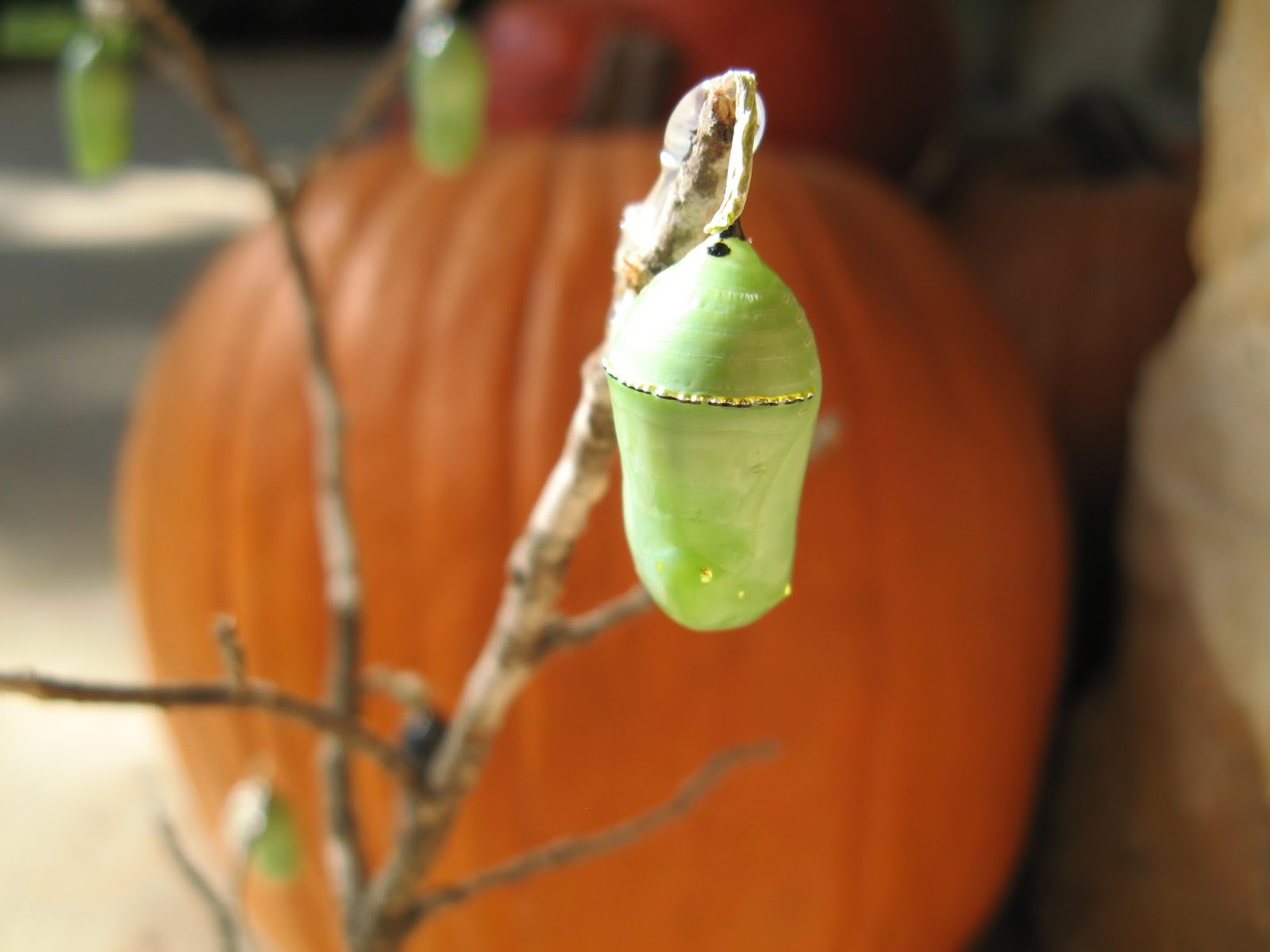
Live! Monarch (Danaus plexippus) chrysalises adorn this beautiful mantel piece.


Butterfly and Pumpkin
My children helped me feed these caterpillars in plastic jars and then transfer the chrysalises to the tree once they had dried and hardened a bit.


Danaus plexippus
How can an insect produce metallic touches like gold and silver?  Organic jewels designed to be admired.


Monarchs and Pumpkins
Many butterfly chrysalises shed their camouflage and become translucent hours before they eclose (emerge from their chrysalis) like these Monarchs pictured above.


pending eclosure
Unfortunately many Chrysalises not chosen for the indoor Butterfly Tree that were left in the wilds of the front flower bed did not survive to adulthood.  I saw them devoured or at least tasted by lizards, spiders, birds, squirrels, wasps, and other unseen villains, who knew that these supposedly distasteful butterflies had so many enemies.

ready to eclose

Monarch
Danaus plexippus recently eclosed.

monarch


Garden for Butterflies
Here is the butterfly garden in front of our house that may have attracted the abundance of butterflies this year.  I have not seen so many Monarch visitors since this fall season several years ago.


Halloween Colors on Monarchs
Already sporting festive Halloween coloring.

Monday, February 15

Colorado Bend State Park

Colorado Bend State Park
Echinocereus coccineus (Scarlet hedgehog cactus) growing not in the ground but rather on the top of a rock that has collected leaf litter from Ashe juniper trees in the area.


Horse Crippler Cactus
Echinocactus texensis (Horse Crippler Cactus)


Prairie celestials
Nemastylis geminiflora (Prairie celestials)

Horse Crippler Cactus


Nine-banded Armadillo
Nine-banded Armadillo (Dasypus novemcinctus)


Blue curls flower
Since this Phacelia congesta (Blue curls flower) likes cactus type soils I think it would make a good cactus garden companion plant.  When it loses its graceful beauty post flowering it can be pulled up leaving at least one plant to produce the next years seeds that will grow during the winter and be ready to flower again in the spring.


Lace hedgehog cactus
Echinocereus reichenbachii (Lace hedgehog cactus).


Colorado Bend State Park
Gorman Falls - Quite impressive for the middle of Texas! given a little rain.

Monday, February 8

First Cactus Garden - Horseshoe Bay, Texas


Container Garden
Upon my return from visiting the Huntington Gardens in California I created this small cactus garden for my Mom in Horseshoe Bay in Central Texas.


Notocactus leninghausii
You will see that in this first attempt I paid little attention to what might or might not be cold hardy long term.  Surprisingly many of the more tender plants survived and bloomed for several years before finally succumbing to temperatures in the  mid teens.  The Thelocactus setispinus (middle left) and Notocactus leninghausii (top left) would be the long term survivors.
Cold Hardy Container garden
An advantage to a small garden like this is that it can easily be covered with a blanket should subfreezing temperatures occur.  However, this protection is much less effective when temperatures stay below freezing for more than about eight hours at a time.


Nipple Cactus
I rescued this little beauty from a new housing development close to my house.  It had already been unearthed and run over by a bull dozer clearing lots.  I was able to clean it up and pot it and the following spring it rewarded my efforts with a beautiful bloom and lots of little "pups" around the base.
Texas Nipple Cactus
This is a Pineapple Cactus (Coryphantha sulcata).


False Copperhead snake
What I thought originally might be a Copperhead snake turns out to be the more kid friendly and beneficial Texas Rat Snake.  I am happy for him to eat is many rats as he likes, unfortunately they also eat baby birds and bird eggs as I will show in a later post.
Lesser Gold Finch
Living Bird Seed!!! - This Ice Plant (Delosperma cooperi) turned out to be a favorite food of all sorts of finches (Lesser and American Gold Finches as well as Purple Finches and possibly House Finches) visiting our back yard, how they learned to eat it I have no idea being that it is non native and if they would even visit it had it been growing sprawled across the ground rather than suspended in a hanging basket.  Maybe there are other native succulent plants that finches consume in this way?

Wednesday, February 3

Balboa Park, San Diego, CA

San Diego
We were told by native Californians that this was a terrible time of year to visit San Diego because of the "June Gloom".  A time of the year when skies can be overcast and temperatures are cooler.  Coming from Austin where it was 107 degrees Fahrenheit in the shade, the idea that it might not be as sunny and hot as some people where looking forward to did not bother me one bit.  The above "gloomy" picture was taken at an "awful" 71 degrees.


Balboa Park
Jacaranda mimosifolia is the purple tree you see all over San Diego this time of year (June).
Purple-haze-jacaranda-fever-hits-San-Diego

Balboa Park
The Jacaranda (Purple) and the Bougainvillea (Pink) seen here in the Spanish Village (within Balboa park) are both supposedly hardy to about 19 degrees Fahrenheit.  The Bougainvillea often comes back from the roots at even colder temperatures.  Maybe with global warming we'll start seeing these in Austin! 


Balboa Park
"LOOK OUT!"  There is a green monster behind you!  I can testify I have been grabbed by a few of these in the past.  Interesting how the trunk of the cactus just looks like a normal tree (after about 80 years).


Balboa Park
Ferocactus pilosus aka Ferocactus stainesii at my feet and aloe (ferox?) behind as to the others I have lost track of the names but I like the candelabra shape.


Balboa Park
Crassula coccinea 'campfire' hardy to about 20 degrees Fahrenheit.  I may end up trying this in my garden just too much color to ignore when it may survive with a timely placed blanket a few days a year.


Agave
Many of the aloes were blooming along with Dyckias (right) and Agaves (center).


Wednesday, January 27

Huntington Gardens

A 120 acres of incredible gardens on rolling hills in San Marino, California.
A must see Meca for gardeners around the world.

The Huntington Desert Garden


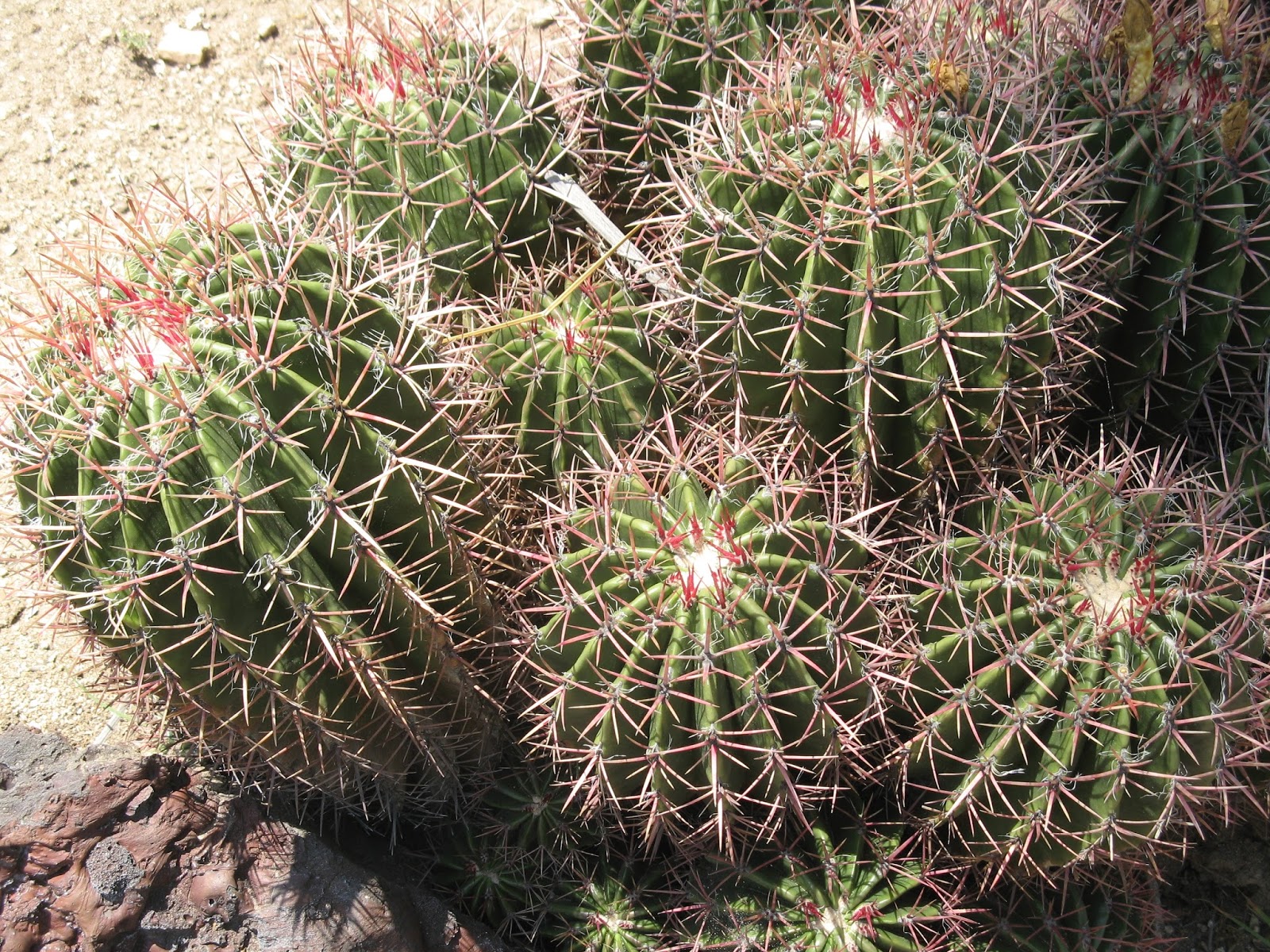
Clump of Mexican Fire Barrel Cactus
This is a group of Mexican Fire Barrel cactus (Ferocactus pilosus).  I took special note of this cactus when I learned that this cactus was rated cold hardy to about 17 degrees Fahrenheit, that makes it possible to grow in Austin, Texas with a towel covering maybe one or two nights a year (I added this to my plant list).

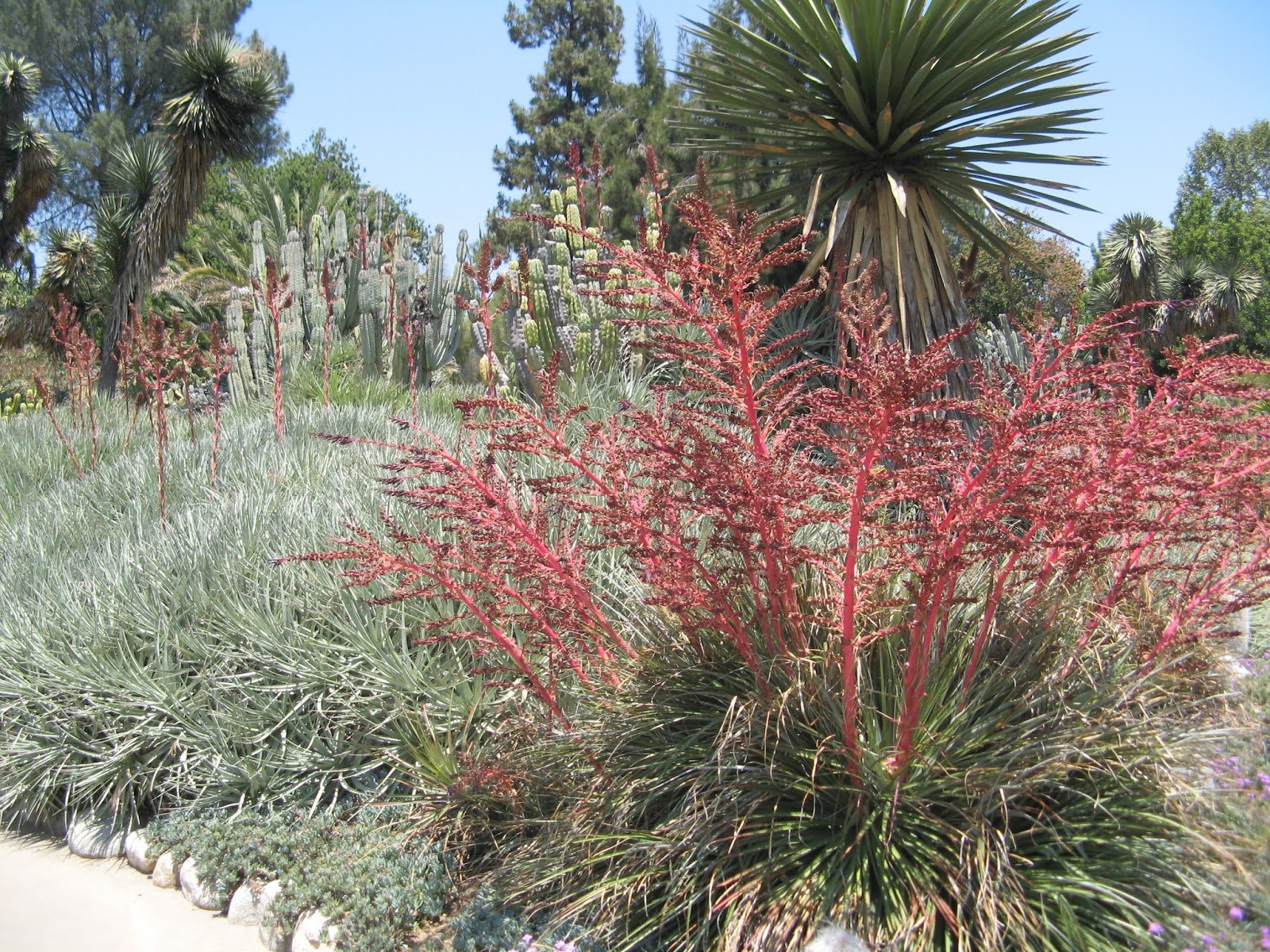
Dyckia
The Huntington Gardens was my first exposure to Hechtia's and Dyckia's seen blooming above.  Some of which were giant plants the size of a VW Beetle.  I quickly learned which ones were the most cold hardy and looked forward to adding them to my cactus garden in Austin (which was beginning to come together in my mind at this point)

Old Man of the Andes,
Here is another cold hardy columnar cactus, Oreocereus celsianus (Old Man of the Andes).  Most growers have this rated to about 15 degrees Fahrenheit.  Its a very slow grower but thankfully many older and taller Oreocereus are available from reputable nurseries and even can be found occasionally in big box stores.