 |
| Long-legged Fly (Condylostylus occidentalis) - These flying jewels are welcome in my backyard as one of the smallest predators they eat both mosquitos and aphids. |
 | |
Western Ribbon Snake (Thamnophis proximus)  |

|
| Long-legged Fly (Condylostylus occidentalis) - These flying jewels are welcome in my backyard as one of the smallest predators they eat both mosquitos and aphids. |
| |
Western Ribbon Snake (Thamnophis proximus) |
 |
| Hechtia texensis, a North American bromeliad native to the Big Bend region of Texas. |
 |
| Hechtia texensis is all teeth and nails and tough as the day is long, but with cool weather and in an exposed sunny location it can turn beautiful shades of bright red. Definitely a plant that needs to be discovered by the broader desert loving plant community. |
 |
| Dyckia velascana, a similar species with silver leaves instead of green from Argentina with orange flowers. Both species seem to be right on the growing edge of hardiness suffering a bit when temperatures drop below 16F. |


 |
| Acanthocalycium violaceum |
 |
| Acanthocalycium violaceum |
 |
| Acanthocalycium violaceum |
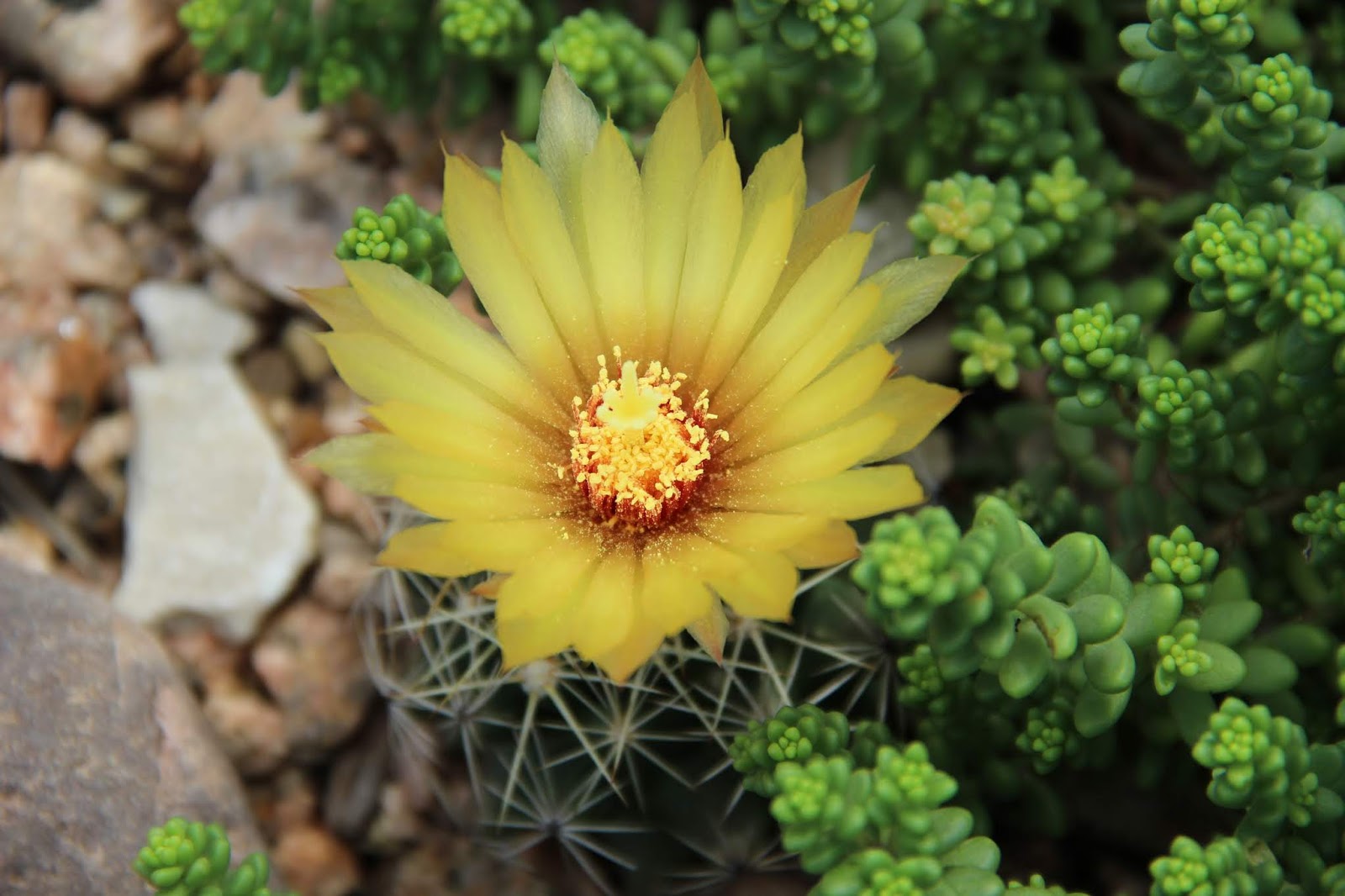 |
| Coryphantha sulcata, Pineapple Cactus |
 |
| Coryphantha sulcata, Pineapple Cactus |
 |
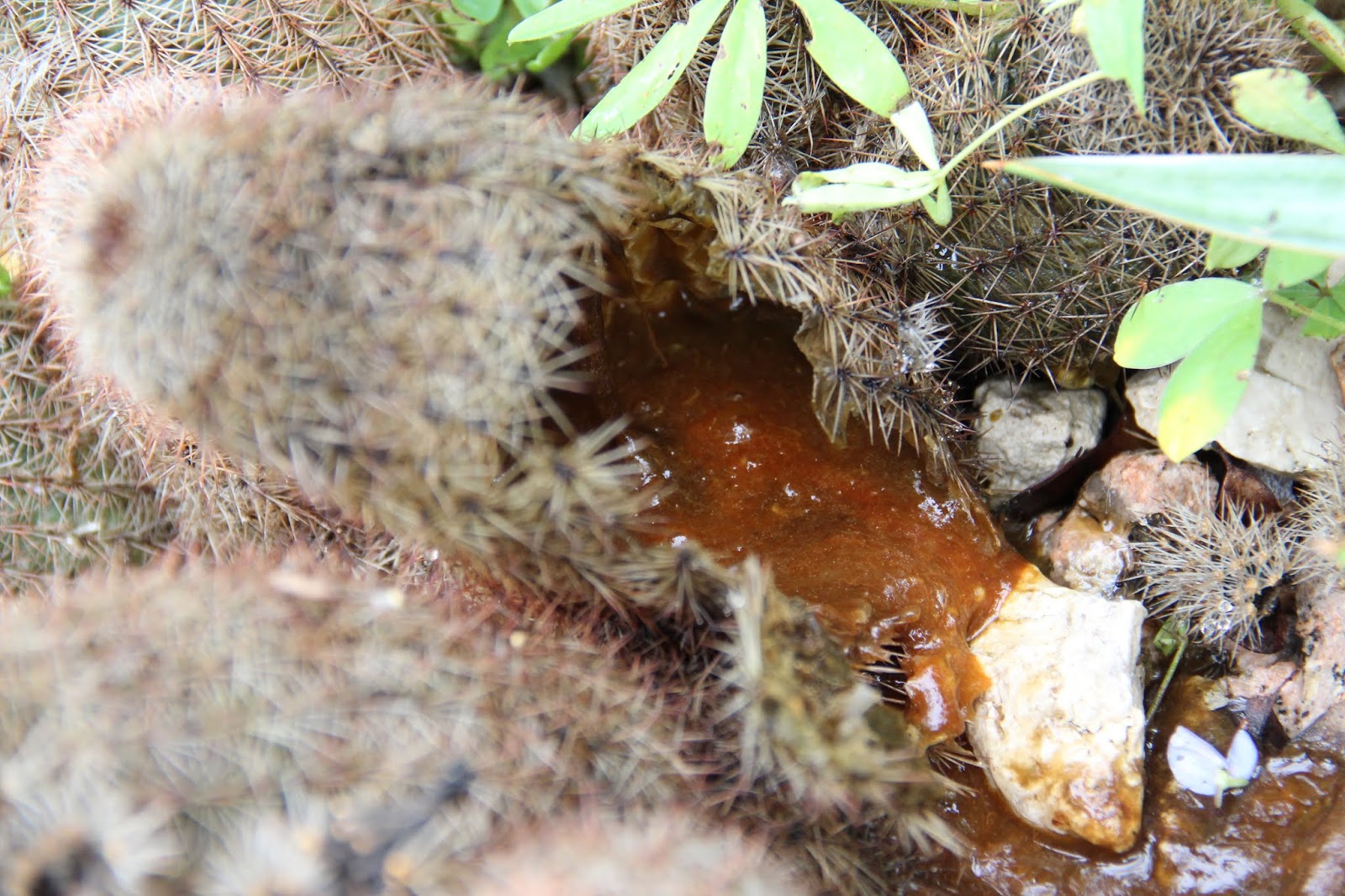
| After more than a week of rain, the northeast side of several cactus started to rot. It can be hot and dry in Austin but at average rainfall of about 23 inches a year, Austin is more than twice as wet as the typical desert environment where these plants thrive. I think air circulation from fans would have helped but then that sort of goes against my survival of the fittest philosophy. |

 |
| Then again seeing beautiful 40 year old cactuses liquify into a brown ooze isn't much fun either. From now on, I think I will grow some desert cactus in pots where they can be more easily maintained, others I will take more effort to plant with more exposure like on the edge of a rock. |

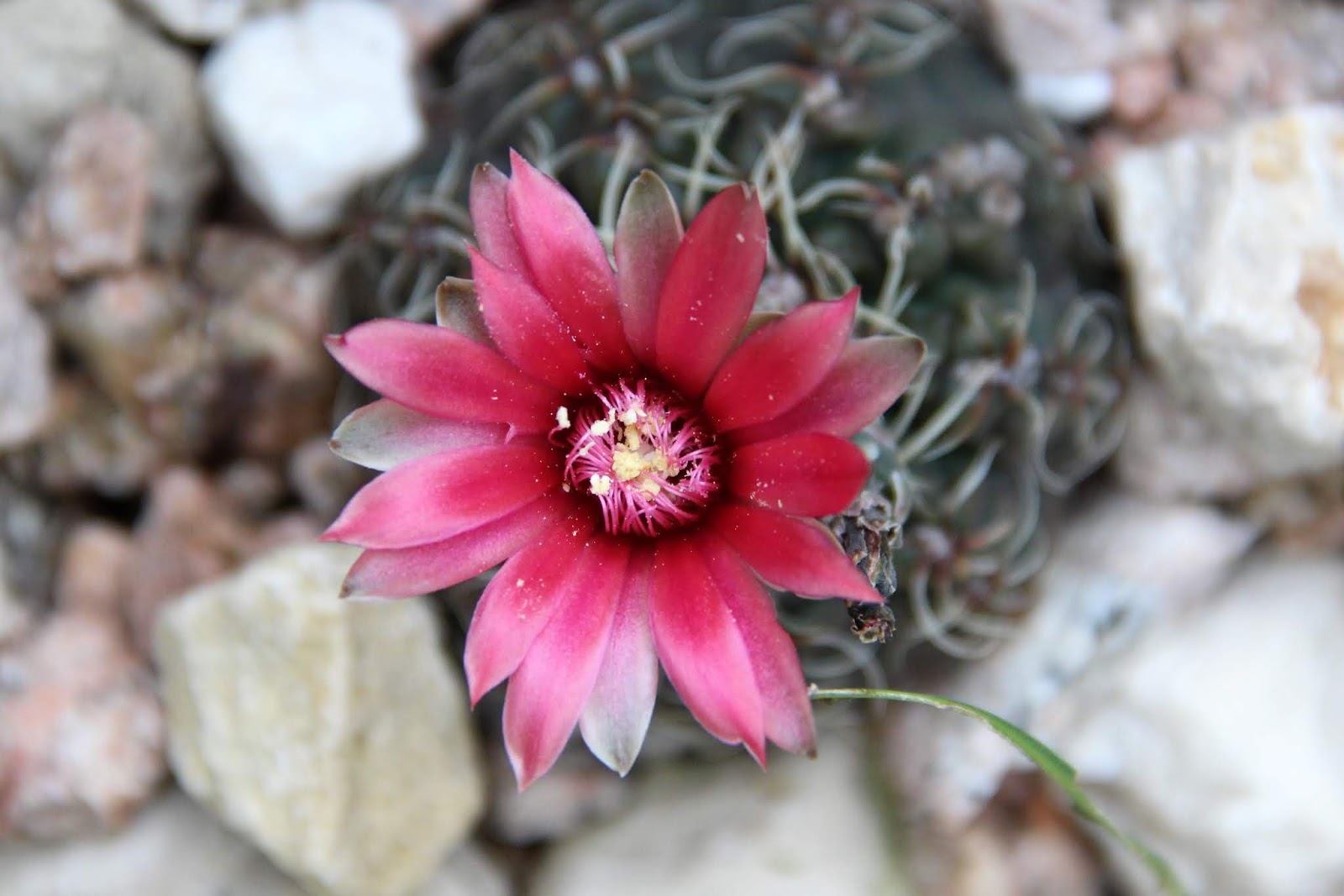 |
| Gymnocalycium baldianum, a charming little cactus with unique velvety rose colored flowers, that lived in my garden for several years. It endured several years with temperatures into the mid teens but finally succumbed to a combination of events the chief of which was neglect. |
 |
| Making a mental note now to give this one another try. |
 |
| Gymnocalycium quehlianum |
 |
| Gymnocalycium bruchii |
 |
| Gymnocalycium bruchii |


